Quick Takeaway
Dubai's strength comes from several systems working together. Tourism brings visitors and spending. A diversified economy supports businesses and employment. Technology is changing government and business services. Strong safety and public infrastructure support the city's appeal as a place to visit, live and do business.
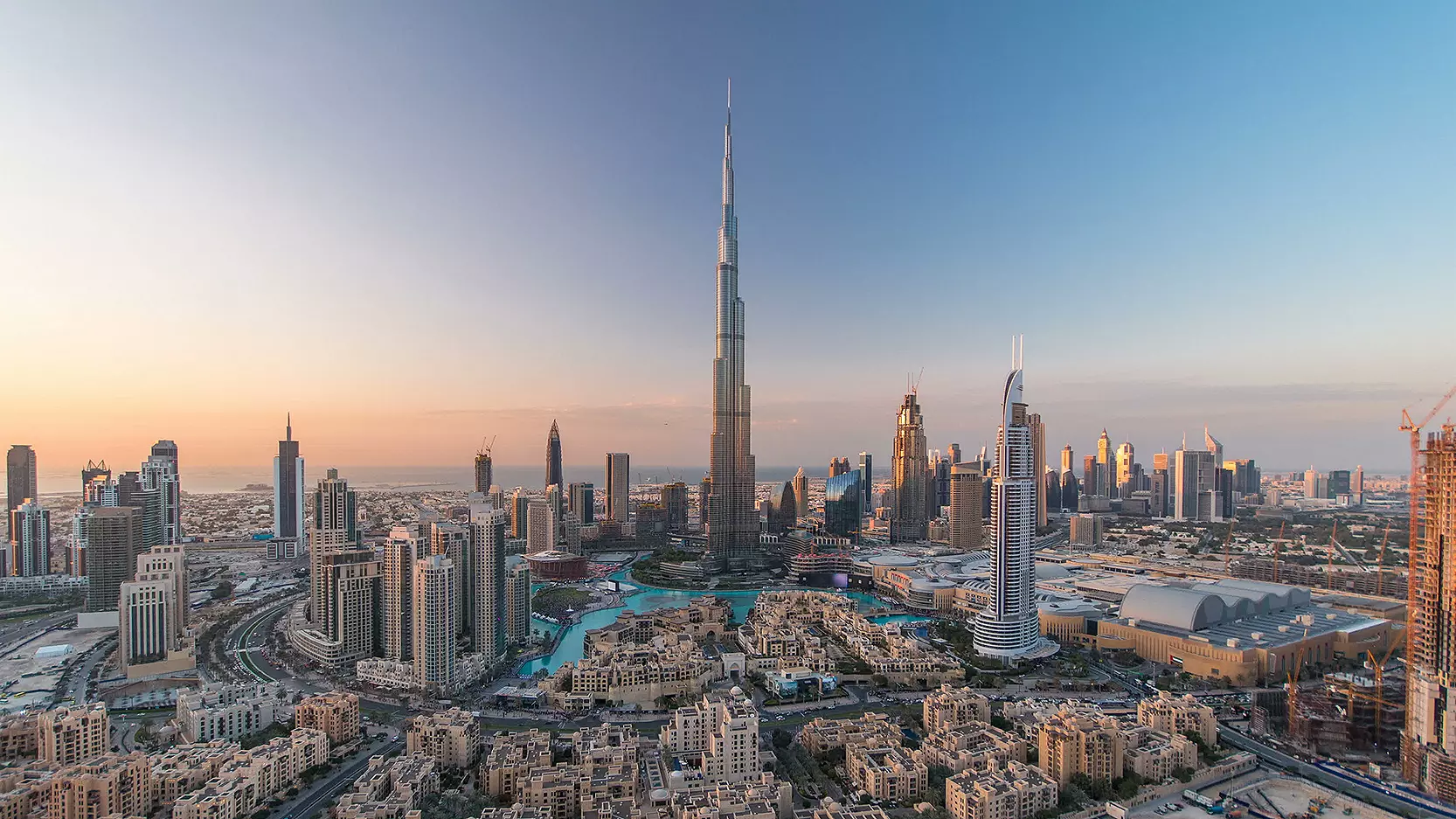
When people talk about Dubai, the first images that often come to mind are the Burj Khalifa, luxury hotels, shopping malls, beaches and desert experiences.
Those attractions are important, but they are only part of the bigger picture. Dubai has spent decades building an economy around international trade, tourism, finance, real estate, transport, technology and business services.
For someone considering a visit, relocation or property purchase, understanding this broader picture can be more useful than looking at property prices alone.
Dubai as a Global Tourism Destination
Tourism is one of the most visible parts of Dubai's economy. The city has developed a year-round destination strategy that combines leisure, business travel, shopping, hospitality, entertainment, events and international conferences.
According to Dubai's Department of Economy and Tourism, Dubai welcomed 19.59 million international overnight visitors in 2025, up from 18.72 million in 2024. That represented a 5% year-on-year increase and marked a third consecutive record-setting year.
Tourism also creates activity beyond hotels. Visitors spend money on restaurants, transportation, retail, entertainment, attractions and other services. That creates demand across different parts of the city's economy.
A large and diversified visitor economy can support demand for hospitality, short-stay accommodation, retail, restaurants and residential areas connected to major tourism and employment destinations. It does not, however, guarantee property returns.
Tourism is not limited to leisure
One reason Dubai's tourism ecosystem is important is its diversity. The city attracts leisure travellers, business visitors, families, entrepreneurs, investors and international professionals.
In 2025, Western Europe was Dubai's largest source region, accounting for 21% of international visitors. South Asia accounted for 15%, while the GCC represented another 15%.
For Filipino buyers and OFWs, this international mix is relevant. Dubai is not dependent on a single nationality or source market. Its visitor and resident base is highly international.
Dubai's Economy: More Than Real Estate
Dubai's economy is often associated with property, but real estate is only one part of a much larger economic system.
The latest available official figures show that Dubai's GDP reached approximately AED 232 billion in Q1 2026, representing 2.4% growth compared with the same period in 2025.
| Sector | Q1 2026 Performance | Contribution / Context |
|---|---|---|
| Wholesale & Retail | +2.6% | Approximately 22% of Dubai's GDP |
| Financial & Insurance | +6.5% | Approximately 14% of GDP |
| Real Estate | +3.1% | Approximately 11.2% of GDP |
| Construction | +8.2% | Approximately 8.1% of GDP |
| Information & Communication | +2.7% | Approximately 5.2% of GDP |
The numbers show an important point for property investors: Dubai's real estate market operates within a wider economy. Retail, finance, construction, technology, tourism and other industries all contribute to the environment in which property demand develops.
Source: Dubai Media Office
Why diversification matters
A diversified economy can create multiple sources of employment, business activity and population growth.
This matters because people need places to live close to where they work. Businesses need offices, retail locations and logistics infrastructure. Visitors need hotels, restaurants and services.
Property is therefore connected to the wider economy rather than existing separately from it.
Instead of asking only, "Will this property increase in value?", ask, "What economic activity is likely to create demand for this location?"
Dubai and Technology
Technology is becoming increasingly important to Dubai's economic strategy. The city's digital transformation is not limited to startups or technology companies. It also involves government services, transportation, infrastructure, finance, real estate and everyday services.
Dubai's Digital Strategy focuses on creating a connected digital society while expanding the digital economy, infrastructure, cybersecurity and digital services.
More recently, artificial intelligence has moved higher on the city's agenda.
Dubai's move toward AI-powered services
In June 2026, Dubai announced the establishment of the Artificial Intelligence and Data Authority. The authority is intended to unify public data, artificial intelligence and digital government capabilities within a national ecosystem.
Dubai has also launched initiatives focused on accelerating Agentic AI adoption in the private sector. A 2026 programme outlined ambitions involving 295,000 companies, 100 specialised AI assistants and support for the creation of 50 Agentic AI companies over two years.
What technology can improve
- Government and public services
- Business operations
- Transportation
- Financial services
- Urban planning
- Real estate services
- Customer experience
Why investors should watch it
- Technology can attract companies and talent.
- Digital infrastructure can support business growth.
- New industries can create employment.
- Employment growth can influence housing demand.
- Smart-city systems can improve urban services.
Sources: Dubai Digitalization and Dubai Protocol
What technology means for real estate
Technology does not automatically make a property a better investment. However, it can influence the environment around real estate.
A city that attracts technology companies and highly skilled professionals may create new employment clusters. Those clusters can increase demand for housing, offices, retail and supporting services.
For investors, the useful question is therefore not simply whether a project has smart-home features. Look at the economic ecosystem around the property.
Safety in Dubai
Safety is an important consideration for tourists, families, residents and international investors.
Dubai's tourism authority describes the city as one of the world's safest cities and highlights its public safety infrastructure and emergency services. The UAE Government also provides dedicated emergency systems for police, ambulance, fire and other incidents.
Dubai also introduced a new public safety law in 2026. Law No. 2 of 2026 establishes a legislative framework aimed at maintaining safety standards for individuals and property, including safety at venues and events.
Safety is also about knowing the rules
Visitors and residents should not assume that familiar laws and social practices from their home country apply in exactly the same way in the UAE.
Before travelling or relocating, it is sensible to understand local laws, road regulations, public behaviour expectations, photography restrictions, alcohol rules and other applicable requirements.
For emergencies, the official UAE Government lists 999 for police, 998 for ambulance and 997 for fire and civil defence.
Sources: UAE Government and Dubai Public Safety Law
What Does This Mean for Property Buyers?
If you are considering buying property in Dubai, looking only at a property's price per square foot can leave out important information.
The stronger approach is to understand the environment that supports the property.
1. Look at the location's economic purpose
Is the area primarily residential? Is it connected to offices, tourism, retail, education, healthcare or logistics?
Understanding why people need to be in an area can help you understand potential demand for housing.
2. Study infrastructure
Roads, metro connections, airports, schools, hospitals, shopping areas and business districts can influence how useful a location is over time.
3. Understand the target tenant or buyer
A studio apartment aimed at young professionals is a different proposition from a family villa, holiday home or larger investment property.
4. Separate facts from marketing
A development may be marketed as a strong investment, but the buyer should independently examine the location, developer, payment plan, service charges, completion status, comparable properties, financing and expected costs.
5. Do not assume economic growth guarantees property returns
A growing economy can create favourable conditions, but no city, sector or property guarantees capital appreciation or rental income.
What Should a Dubai Property Investor Check?
Before reserving a property, consider the following checklist.
- Developer: Research the developer's track record, completed projects and delivery history.
- Location: Understand transport, employment centres, amenities and future infrastructure.
- Property type: Determine whether the unit matches the needs of the target buyer or tenant.
- Total acquisition cost: Consider more than the advertised property price.
- Payment structure: Understand the reservation, instalment and post-handover obligations before signing.
- Service charges: Understand the recurring costs associated with ownership.
- Rental assumptions: Use realistic comparable data rather than guaranteed figures.
- Exit strategy: Consider who may buy the property from you in the future.
- Legal and financial due diligence: Verify the transaction and relevant documentation through appropriate professional and official channels.
Discover Dubai Beyond the Property Market
One of the most useful ways to evaluate Dubai real estate is to first understand Dubai itself.
Walk through the business districts. Visit established communities. Experience the transport system. Look at how residents spend their time. Observe where businesses are expanding and where infrastructure is being developed.
Tourism tells you something about visitor demand. The economy tells you where businesses and jobs are developing. Technology shows how the city is preparing for the future. Safety and infrastructure tell you something about the environment in which residents and businesses operate.
None of these factors should be viewed in isolation. Together, they provide a more complete picture of Dubai.
Final Investor Takeaway
Dubai's appeal is not based on one industry or one landmark. Its strength comes from the interaction between tourism, commerce, finance, technology, infrastructure, real estate and international connectivity.
The latest data shows continued economic activity, record tourism in 2025 and an aggressive push toward digital and artificial intelligence adoption in 2026.
For someone considering Dubai property, the bigger lesson is simple: understand the city before choosing the property.
A good property decision starts with the fundamentals: location, demand, developer, costs, financing, legal structure and your own financial position.
Frequently Asked Questions
Dubai welcomed 19.59 million international overnight visitors in 2025, according to Dubai's Department of Economy and Tourism. Tourism contributes to hospitality, retail, transportation, restaurants, entertainment and other areas of the economy.
Dubai's GDP reached approximately AED 232 billion in Q1 2026, representing 2.4% growth compared with Q1 2025. Real estate activities grew 3.1% during the quarter.
Dubai has extensive public safety and emergency systems. The UAE Government lists 999 for police, 998 for ambulance and 997 for fire and civil defence emergencies. Visitors should also understand applicable UAE laws and local rules.
Technology can support business formation, employment, infrastructure and economic activity. These factors can influence demand for residential and commercial space, although they do not guarantee property appreciation or rental returns.
Thinking About Dubai Property?
Start with the fundamentals. Explore Dubai property options, understand the numbers and speak with a qualified professional before making a purchase decision.
Information in this article is provided for general educational and informational purposes only. Tourism figures, economic data, regulations, property prices, availability, payment plans and market conditions can change. Investment returns, rental income, capital appreciation, resale value or future property prices are not guaranteed. Readers should verify current information with relevant official sources and conduct appropriate financial, legal and property due diligence before making a purchase or investment decision.